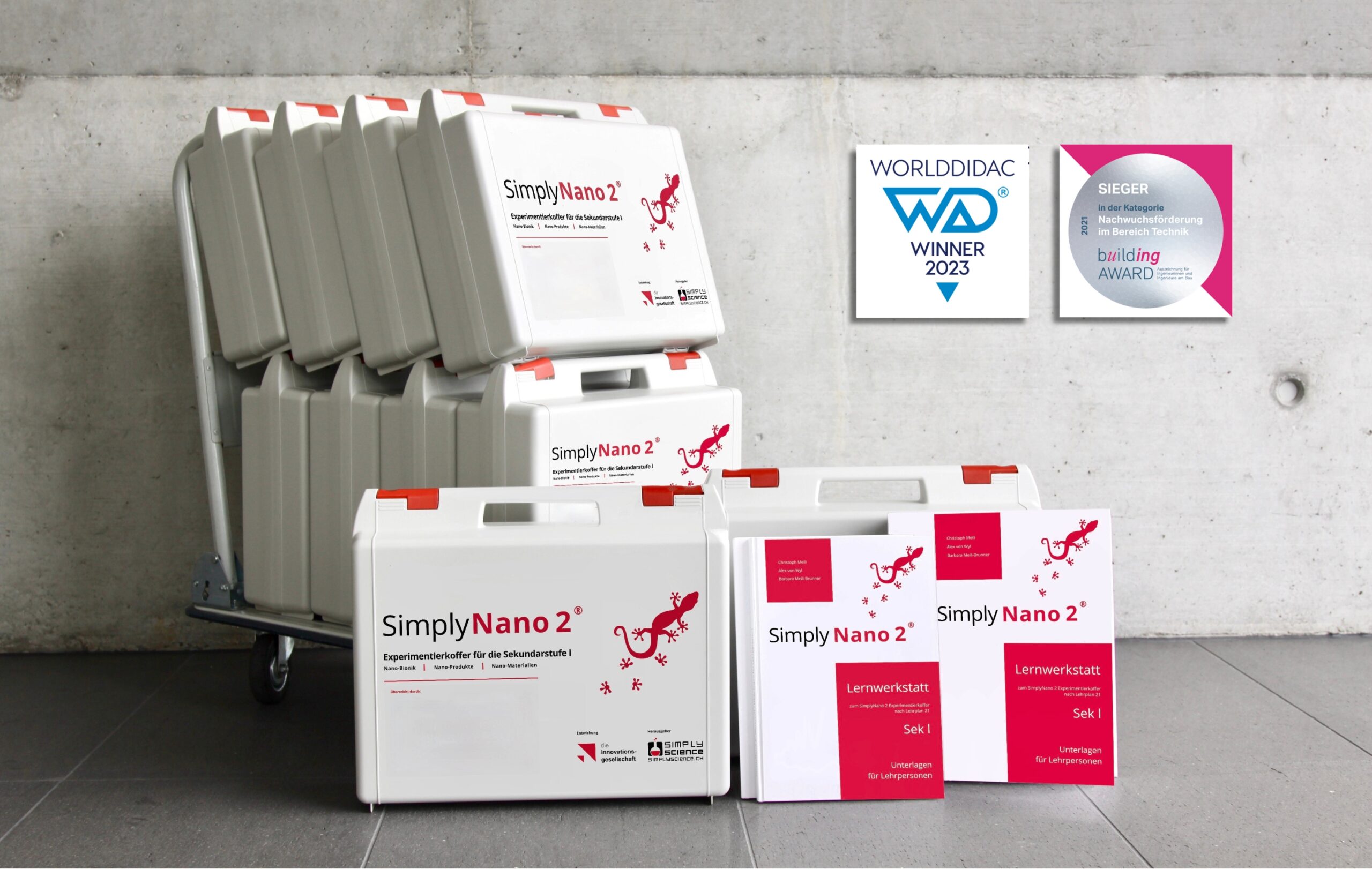
Was ist SimplyNano?
SimplyNano ist ein interdisziplinäres Bildungsprojekt zur Förderung der MINT-Fächer (Mathematik, Informatik, Naturwissenschaften und Technik) in Schulen. Das Projekt besteht aus den Experimentierkoffern SimplyNano 1 und SimplyNano 2 mit einer Werkstatt zum Lehrplan 21, Weiterbildungskursen für Lehrpersonen und einem Partnernetzwerk.
Experimentieren mit SimplyNano
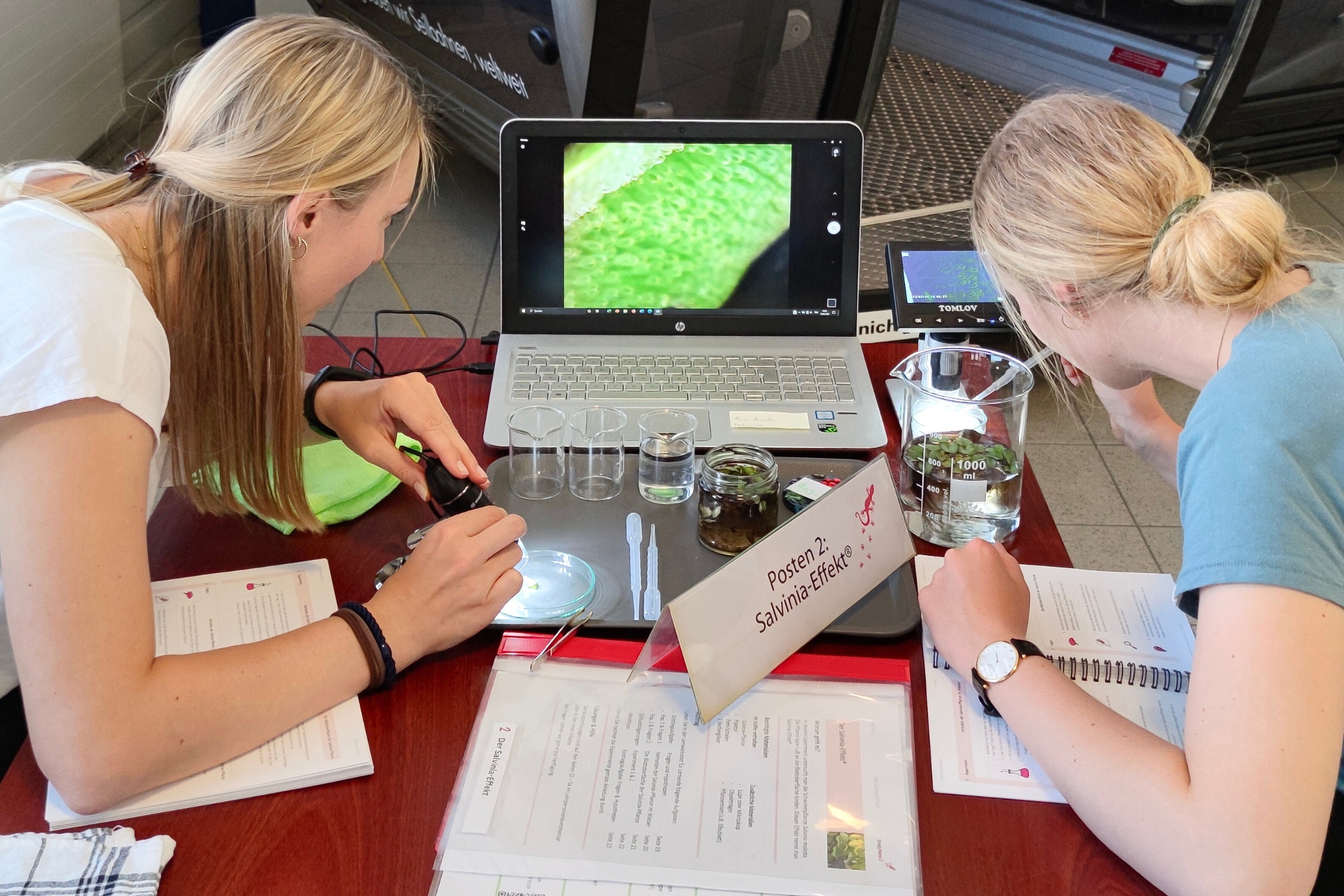
Weiterbildung für Lehrpersonen

Begeisterung für technische Berufe
Die beiden Experimentierkoffer SimplyNano 1 und 2 eignen sich als umfassendes Lehrmittel für den Schulunterricht ab der Sekundarstufe.
In den Weiterbildungskursen erhalten die Lehrpersonen einen Überblick über das gesamte Lernmedium. Sie führen die Experimente selbst durch und erhalten didaktisch-methodische Hinweise und Verweise zum Lehrplan 21.
Die Vernetzung zwischen Schulen und Partner-Firmen fördert zukünftige Fachkräfte. Experimente mit einer Vielzahl von neuartigen Nanomaterialien wecken bei Jugendlichen das Interesse für praktische Anwendungen, technische Berufe und Ausbildungen.

Awards für SimplyNano
Wir danken an dieser Stelle allen Sponsoren und Gönnern herzlich für Ihre vergangene und zukünftige Unterstützung des Projekts.